
Why is Cartilage Important for Joint Health?

What is Joint Cartilage?

Your joints are where two or more bones meet, allowing you to move, bend, and stay active. But bones rubbing together would not feel good! That is where cartilage comes in—it is a smooth, cushion-like layer that covers the ends of your bones, helping your joints move freely and comfortably.

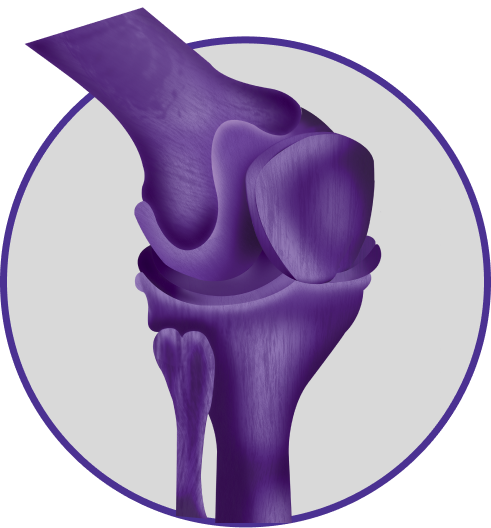
Illustration: Side-by-side comparison of a joint with healthy cartilage (smooth, cushioned) vs. a joint without cartilage (bones rubbing together).

Inside your joints, there’s also synovial fluid—a natural lubricant that helps keep cartilage hydrated and nourished, workinglike oil in a well-running machine. Surrounding the joint, ligaments hold bones together, while tendons connect muscles to bones, helping you move with control and stability.

Illustration: A simple diagram of a joint with callouts for cartilage, synovial fluid, ligaments, and tendons, visually showing how they work together.

Every time you take a step, climb stairs, or even reach for something, your cartilage and joint fluid work together like a shockabsorber, helping your joints stay flexible and supported.

Why Joint Cartilage Breaks Down

Your cartilage constantly undergoes a natural cycle—the body breaks down old cartilage and builds new cartilage to replace it. When this process stays in balance, your joints stay supported.

But sometimes, this balance gets disrupted, and cartilage breaks down faster than your body can rebuild it. Here are a few common reasons:

  • Age–Cartilage naturally wears down over time.
  • Weight–Extra weight puts more stress on your joints.
  • Activity Level–Too much impact (like high-intensity sports) or too little movement can affect joint health.
  • Injury–Damage from past injuries can weaken cartilage.
  • Genetics–Some people may be more prone to cartilage breakdown because of their DNA.

Unlike other tissues in your body, cartilage does not have a direct blood supply. Instead, it gets nutrients from the surrounding joint fluid. Injury or lack of movement can interrupt this process, causing cartilage to lose its protective cushion faster than it can be replenished.

Illustration: A simplified joint diagram showing articular cartilage as a protective cushion and synovial fluid as a lubricant, with arrows showing movement.

Working at the Cellular Level to Promote Joint Comfort*

ā€CosaminĀ® DS and CosaminĀ® ASU work at the cellular level inside the joint to help support cartilage.* Cartilage in the joint is produced and maintained by its own specialized cells, called chondrocytes. In a healthy joint, there is a natural, on-going process in which chondrocytes release chemicals that trigger enzymes that break down cartilage. CosaminĀ® DS and CosaminĀ® ASU help inhibit certain enzymes that break down cartilage.*

CosaminĀ® DS and CosaminĀ® ASU Help Inhibit Certain Enzymes that Break Down Cartilage*

Measurable biomarker How it can affect your health
High-sensitivity C-reactive protein (hsCRP) An indicator of processes that can negatively impact joint health
Interleukin-6 (IL-6) Interferes with the production of key structural proteins in cartilage extracellular matrix (Type II Collagen and Aggrecan) and induces the expression of matrix metalloproteinases (MMPs)
Matrix metalloproteinases (MMPs) Play a role in breaking down cartilage
Interleukin 8 (IL-8) Plays a role in processes that can negatively impact joint health
Prostaglandin E2 (PGE2) A lipid signaling molecule (substance) associated with joint discomfort and cartilage breakdown
Cyclooxygenase-2 (COX-2) Involved in the production of PGE2 which is associated with joint discomfort and cartilage breakdown

Why Support Your Joint Health?

Every time you walk, run, or bend, your joints absorb force—helping you move smoothly and comfortably. But over time, the stress on your joints adds up, and that is why taking care of them is essential.

Illustration: A simplified joint diagram showing articular cartilage as a protective cushion and synovial fluid as a lubricant, with arrows showing movement.

How Your Joints Stay Supported

Inside your joints, a special type of cartilage called articular cartilage acts as a smooth, cushioned layer between bones. It works alongside synovial fluid, a natural lubricant that keeps cartilage hydrated and nourished. Together, they help absorb impact and keep your joints moving.

Illustration: A person in motion—walking, running, and bending—showing how joints are involved in everyday movement.

Cosamin DS and Cosamin ASU feature revolutionary formulas that work at the cellular level to block certain enzymes that break down cartilage.*

Why Joint Support Matters

Even though your joints are designed to handle pressure, factors like age, activity level, and everyday wear and tear can affect cartilage over time. Supporting your joint health now can help you stay active and comfortable for years to come.

Illustration: A simplified joint diagram showing articular cartilage as a protective cushion and synovial fluid as a lubricant, with arrows showing movement.

Cosamin DS and Cosamin ASU feature revolutionary formulas that work at the cellular level to block certain enzymes that break down cartilage.*

How Does CosaminĀ® Work?

CosaminĀ® supplements are designed to support joint health* through various formulas, depending on the specific product:

  • CosaminĀ® DS: Combines Glucosamine HCl (FCHG49Ā®) and Chondroitin Sulfate (TRH122Ā®) to block enzymes that breakdown cartilage, supporting joint comfort.*
  • CosaminĀ® ASU: Our advanced formula* that includes Glucosamine HCl (FCHG49Ā®), Chondroitin Sulfate (TRH122Ā®),avocado/soybean unsaponifiables (ASU) (NMX1000Ā®), AKBA (Boswellia serrata extract from QUIKLOXĀ®), and decaffeinated green tea extract. This combination works faster than glucosamine alone to promote joint comfort by decreasing markers associated with cartilage breakdown.*
  • CosaminĀ® Muscle & Joint: Designed to promote joint health and muscle comfort,* this formula contains Glucosamine HCl(FCHG49Ā®), Eggshell Membrane (NMXEM70ā„¢), and the QUIKLOXĀ® Plus blend (Boswellia serrata extract and olive extract).

The CosaminĀ® Brand offers a range of options to support your lifestyle

Backed by Science

CosaminĀ® DS and CosaminĀ® ASU are backed by decades of scientific research. Laboratory studies show that the ingredientsin these formulas help by influencing key biomarkers linked to cartilage breakdown and joint discomfort.*

Here are a few of the biomarkers studied:

  • hsCRP (High-sensitivity C-reactive protein): A marker linked to processes that may impact joint health.
  • IL-6 (Interleukin-6): Affects how the body builds and maintains cartilage.
  • MMPs (Matrix metalloproteinases): Enzymes that play a role in breaking down cartilage.
  • IL-8 (Interleukin-8): Involved in responses that may affect joint comfort.
  • PGE2 (Prostaglandin E2): A molecule associated with joint discomfort and cartilage damage.
  • COX-2 (Cyclooxygenase-2): Helps produce PGE2 and is also linked to cartilage breakdown.

Frequently Asked Questions

Your doctor knows that not all glucosamine and chondroitin supplements are the same. CosaminĀ® is the #1 researched glucosamine and chondroitin brandā–² and is backed by rigorous quality testing. Each batch is tested for stability, quality, and label accuracy by independent laboratories and by Nutramax Laboratories’ own Quality Control team.

No, we use a non-shellfish derived glucosamine in CosaminĀ® DS, CosaminĀ® ASU, and CosaminĀ® Muscle & Joint formulas.

Yes, CosaminĀ® DS, CosaminĀ® ASU, and CosaminĀ® Muscle & Joint are all gluten-free.
Don’t miss out on the latest Nutramax news!

Get exclusive content on all of our products especially catered to you and your pet’s needs.
Thank you! Your submission has been received!
Oops! Something went wrong while submitting the form.
Cookie Preferences